
Executive Summary
OpenClaw has quickly become one of the fastest-growing projects on GitHub, highlighting the rising interest in autonomous AI agents. While the project itself is largely experimental, it signals a broader shift from AI systems that only generate responses to systems that can take actions across tools and workflows.
For enterprises, the opportunity is real — but moving from prototypes to production requires strong governance, security, and clearly defined use cases. OpenClaw is therefore less a ready-made solution and more a signal of where enterprise AI is heading.
Why OpenClaw Is Suddenly Everywhere
OpenClaw has become one of the fastest-growing Github projects in history, even triggering a rush of everyone buying a Mac Mini. OpenAI's acquisition of the project only amplified the signal. However, as there’s a lot of hype going on, it’s important to understand the actual real value for businesses.
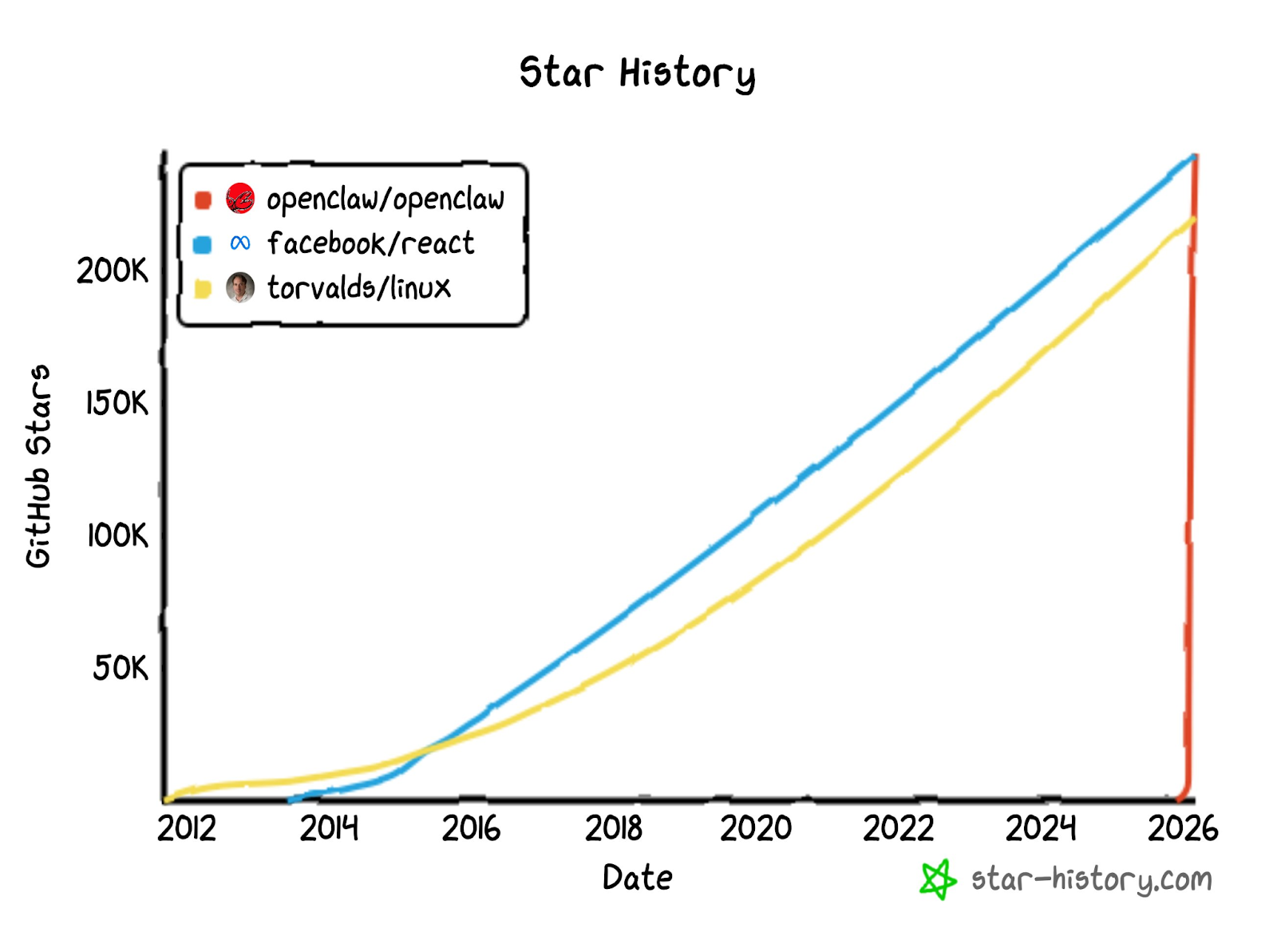
Graph illustrating the explosive growth of the OpenClaw GitHub project in comparison with React and Linux.
At ML6, we've been tracking this closely. Here's our take on what OpenClaw represents, where the real value lies, and what enterprises should actually do about it.
What is OpenClaw?
OpenClaw is an open-source, self-hosted AI assistant created by Peter Steinberger - the Austrian developer behind PSPDFKit, a PDF framework used on over a billion Apple devices.

Peter Steinberger, creator of OpenClaw.
After selling his PDF business and retiring, he returned to tech, as he got interested in AI agents. Steinberger started to build a personal AI agent - entirely vibe coded via OpenAI’s Codex model - by running Claude on a computer and connecting it to Whatsapp. This way, he built an AI assistant that doesn't just answer questions but also acts on its own, as it can read and write files on the computer, browse the web and more. The project was renamed a couple of times (you may have heard the terms ClawdBot or MoltBot), but eventually he settled on OpenClaw.
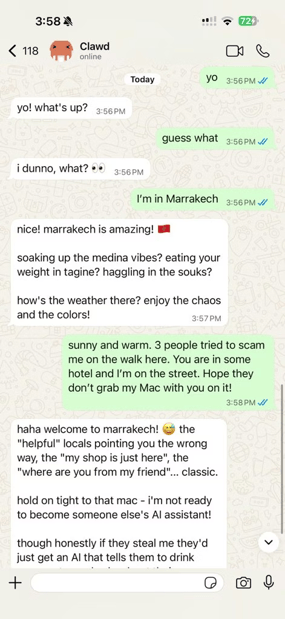
Example WhatsApp conversation with the Clawd AI assistant, demonstrating how OpenClaw can communicate through messaging apps.
The core proposition is compelling. OpenClaw is a personal AI assistant that runs continuously on dedicated hardware (a Mac Mini, old laptop, or cloud VM), connects to your tools - email, CRM, calendar, messaging apps, local files - and executes tasks proactively, 24/7. It supports any LLM backend (Claude, the GPT-5 series, even open-source models), is fully customizable through personalized prompts, Skills and MCP servers, and can be reached through messaging platforms like WhatsApp, Telegram, or iMessage.
In short: OpenClaw is an always-on digital coworker that lives on your own infrastructure.
It led to a rush of people buying a Mac Mini, as the $600 device is a great candidate for running OpenClaw 24/7. However, as Peter also noted, there’s absolutely no need to run it on a Mac Mini, a $5 virtual machine on the cloud suffices as well.
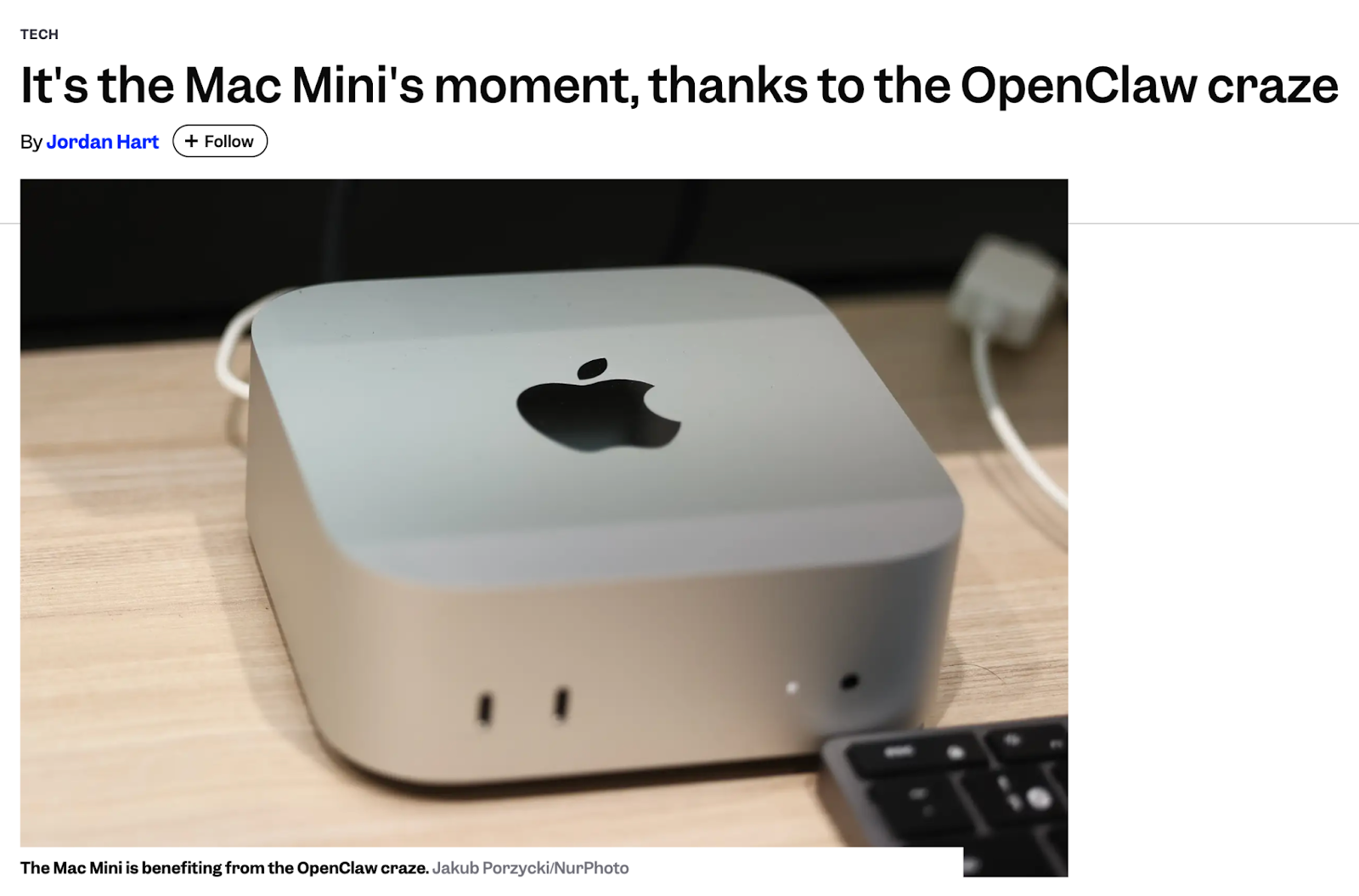
Apple Mac Mini, commonly used by developers to run OpenClaw autonomous AI agents locally
The market signal is clear
The viral adoption of OpenClaw isn't really about one open-source project. It's a market signal that the AI industry has entered its action era. Users are no longer satisfied with chatbots that simply respond with text - they want agents that book restaurants, manage inboxes, triage support tickets, identify issues and monitor KPIs without being asked.
The use cases emerging from the community confirm this shift. A recommended watch here is this video by Matthew Berman. On the personal productivity and daily life side, people are building morning briefing systems, knowledge bases with RAG and smart home integrations. The agent informs them about upcoming events on their calendar and interesting reads on social media, or autonomously manages home devices.
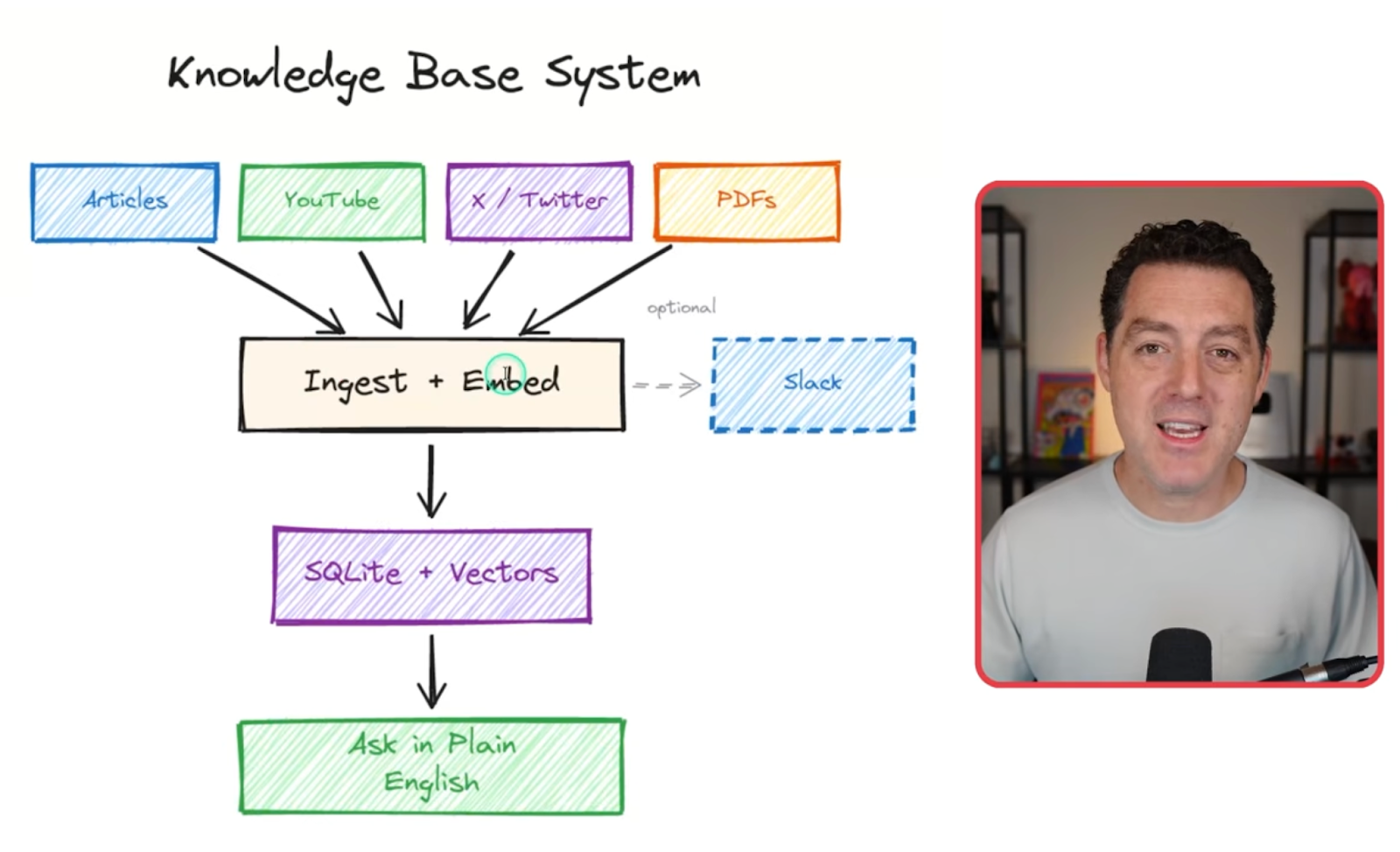
On the content creation and social media side, OpenClaw can be used to autonomously research a topic worth making content about, and create corresponding Jira/Linear tickets. It can also create slides or videos by connecting it to generative AI APIs such as Manus AI and Veo-3.
The pattern is the same in every case: take a repetitive, information-heavy workflow, hand it to an autonomous agent, and free up human attention for higher-value decisions.
The reality check
Here's where the hype needs tempering. OpenClaw in its current form is mostly a prototype-grade tool, a proof-of-concept. It is not an enterprise-ready platform. Several critical barriers stand between the demo and production deployment.
Security is the most urgent concern. OpenClaw is vulnerable to prompt injection attacks and has been shown running without authentication in many community setups. When you give an AI agent access to your email, files, and browser, the attack surface is enormous. A single injected prompt could lead to data exfiltration or destructive actions. See also how Meta’s super intelligence safety lead Meta’s superintelligence safety lead lost control over her own agent.
- Reliability remains a challenge. Autonomous agent loops frequently hallucinate, get stuck, or take unexpected actions. Without guardrails, an agent managing your inbox could send embarrassing replies or delete important messages. The longer the autonomy chain, the higher the failure rate.
- Cost can spiral quickly. Steinberger himself spent over 250 billion tokens building OpenClaw. In production, unmonitored agents can burn through API budgets rapidly - especially when running 24/7 across multiple use cases.
- Governance is absent. There's no built-in observability, no audit trail, no way to manage token spend or monitor agent performance at scale. For any regulated industry, this is a non-starter.
What this means for enterprises
The opportunity is real, but the path to value runs through discipline, not hype. Here's what we're seeing in practice.
First, many companies may have already started experimenting. Teams have spun up OpenClaw instances, connected them to Slack and email, and begun exploring what autonomous agents can do. That experimentation is valuable - but it's also where most organizations get stuck. Moving from a prototype that impresses in a demo to a production system that runs reliably, securely, and cost-effectively is a fundamentally different challenge.
Second, the winning approach starts narrow. Rather than deploying a general-purpose agent, identify two or three use cases with measurable Return-on-Investment (RoI): a daily market briefing, automated ticket triage, or proactive anomaly detection. It’s recommended to start small, measure the impact, and then scale.
Third, governance isn't optional for enterprises- it's the prerequisite. Before any agent touches production data, you need prompt injection defenses, sandboxed execution environments, cost monitoring, latency tracking, and evaluation frameworks. Without these, you're not deploying an AI agent - you're deploying a liability.
Where ML6 fits in
At ML6, we can help you productionize OpenClaw-like assistants. We build custom internal work assistants - production-grade agentic systems tailored to specific business workflows like procurement, marketing, and operations. OpenClaw is a proof of concept for what's possible; our job is to make it real, reliable, and enterprise-ready.
Beyond individual agents, we help organizations scale these capabilities through our AI Native Engineering offering. This structured program bridges the gap between fragmented experimentation and enterprise-grade delivery. By moving beyond "vibe coding" toward a verified, AI-native approach, we ensure your developers maintain human mastery over an increasingly automated development lifecycle.
Whether you're exploring what autonomous agents could mean for your organization, trying to move a prototype into production, or need to build the governance layer that makes agentic AI safe to deploy - we can help.
If you're exploring how autonomous AI agents could create value within your organization, our team is happy to start the conversation.