Energy Company
Predicting Critical Plant Shutdown Risks Before They Happen.


.png?height=2560&auto=compress,webp&upscale=true)
Success starts with people. In times of overwhelming change, your teams deserve a partner that empowers them. Meet our minds, the real intelligence behind ML6 — designed to amplify yours.
Stop buying solutions, generate them, and own them. We’re building the platform that spawns agents to do work for you. From enterprise-scale systems to tailored industry and departmental applications, we help you transform the way you work today.
Our engineers partner with the world’s leading technology providers to deliver robust, scalable & sovereign solutions.
Experience the power of AI for your business through our client cases & testimonials. These stories aren’t just case studies; they’re proof that bold ideas, the right people, and a little AI magic can change the game.
This is where breakthrough ideas emerge and your inner innovator is awakened. Get inspired by the best of ML6's insights and the minds shaping the future of AI.
Success starts with people. In times of overwhelming change, your teams deserve a partner that empowers them. Meet our minds, the real intelligence behind ML6 — designed to amplify yours.
Stop buying solutions, generate them, and own them. We’re building the platform that spawns agents to do work for you. From enterprise-scale systems to tailored industry and departmental applications, we help you transform the way you work today.
Our engineers partner with the world’s leading technology providers to deliver robust, scalable & sovereign solutions.
Experience the power of AI for your business through our client cases & testimonials. These stories aren’t just case studies; they’re proof that bold ideas, the right people, and a little AI magic can change the game.
This is where breakthrough ideas emerge and your inner innovator is awakened. Get inspired by the best of ML6's insights and the minds shaping the future of AI.
To reduce the risk of multimillion-euro shutdowns, a leading European energy producer worked with ML6 to build a real-time AI solution that enables operators to detect critical conditions early and optimize plant performance without compromising safety.
A leading European energy producer partnered with ML6 to help control-room operators anticipate critical operating conditions before they lead to costly plant shutdowns. Using real-time AI risk predictions, operators can make faster, more confident decisions while maximizing plant availability and maintaining safe operations.
The client is a large European energy producer operating thermal power generation assets. These plants rely on complex thermo-mechanical processes where safe operation depends on tightly controlled operating conditions, especially during periods of high load.
Plant operations are overseen by experienced control-room operators who must continuously balance efficiency, availability, and safety while responding to changing environmental and operational constraints.
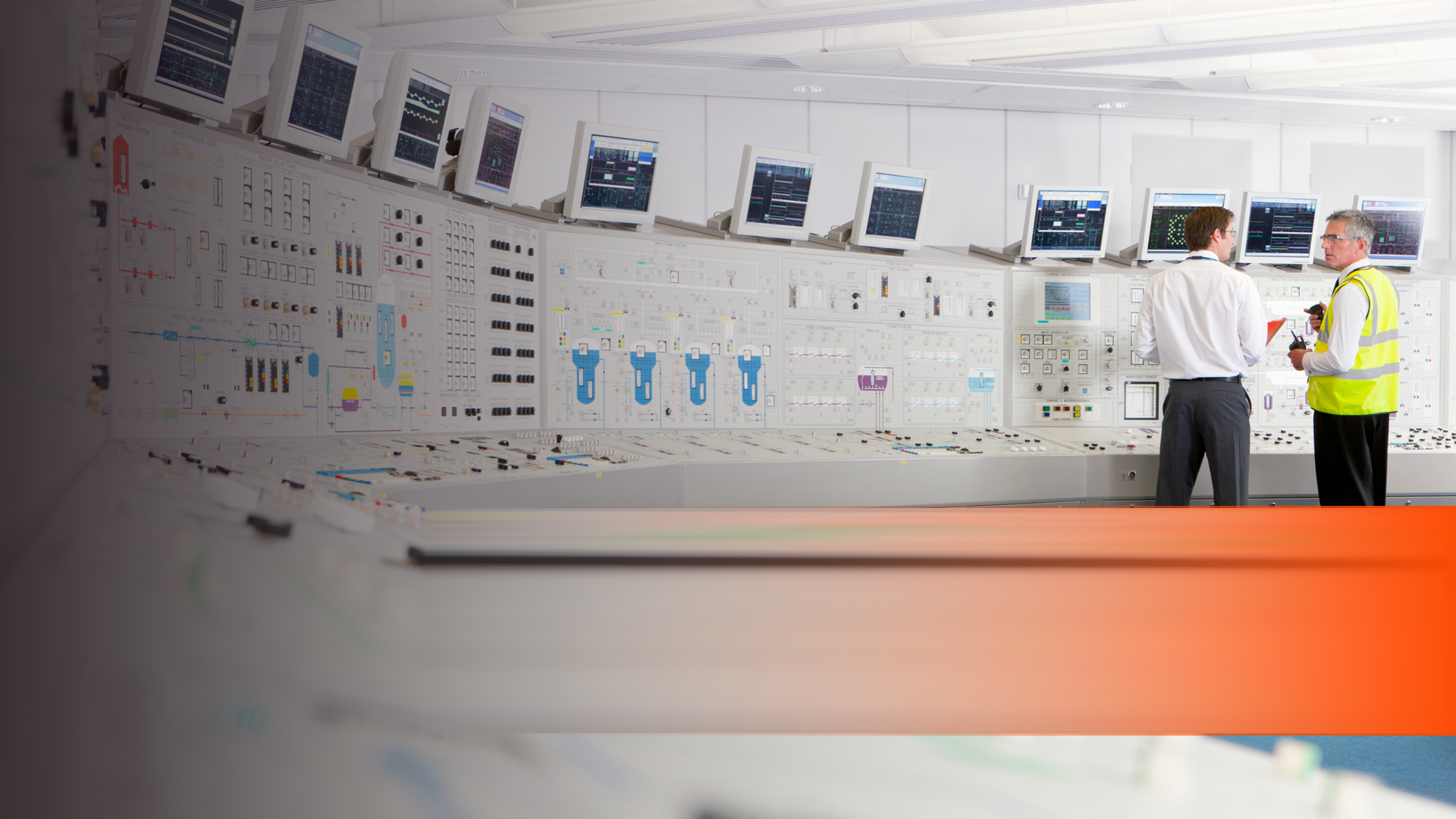
ML6’ work directly supports control-room operators responsible for thermal generation assets, particularly during high-load and high-temperature operating conditions. By providing early risk insights, operators can anticipate critical situations rather than responding once limits are already approached.
This enables more confident decision-making under stress, reducing unnecessary power curtailment while maintaining safety. In practice, it helps operators keep plants online and operating closer to optimal output when conditions are most challenging.
The problem combined several fundamental constraints that made traditional forecasting approaches ineffective:
he plant exhibits significant thermal inertia, meaning the effect of operational changes on key process variables only becomes visible 10–20 minutes later. This delay leaves little room for reactive control actions and increases the risk of interventions coming too late to prevent shutdowns.
Shutdown events are rare by design, resulting in very few high-risk examples in the historical data. While this is desirable from an operational standpoint, it creates a major challenge for machine learning models, which typically require sufficient examples of critical scenarios to learn reliable decision boundaries.
Future operating decisions, such as how much the plant will be ramped up, are not known in advance. This makes many standard forecasting approaches impractical, as they depend on future load profiles that are unavailable to operators at decision time.
Designed specifically for thermal power plants, accounting for thermal inertia, limited historical shutdown data, and unknown future plant load.
Rather than forecasting what the plant will actually do, the model estimates how key process conditions would evolve if ramped to maximum allowable load under current and forecasted environmental conditions.
Runs as a minute-level inference pipeline, continuously ingesting live operational and weather data.
Delivers probability-based forecasts and risk indicators instead of single point estimates, showing not just whether a threshold might be crossed, but how likely and how severe that risk is.
Predictions feed directly into existing control-room dashboards, turning advanced analytics into timely, intuitive decision support for operators.
Successfully forecasted all test-set scenarios in which a plant shutdown would have occurred, with timely early warnings well before critical thresholds were reached.
Particularly significant given that a single shutdown event can cost up to millions of euros in lost production and recovery effort.
Operators shifted from conservative, preventive actions to more targeted, confident interventions during high-risk situations.
mproved decision quality under pressure while reducing unnecessary output reductions, without compromising operational safety.
Ready to elevate your AI game? Schedule a meeting with us today and let’s craft a winning strategy together!