AI-Driven Drone Surveillance for Wildlife Protection.

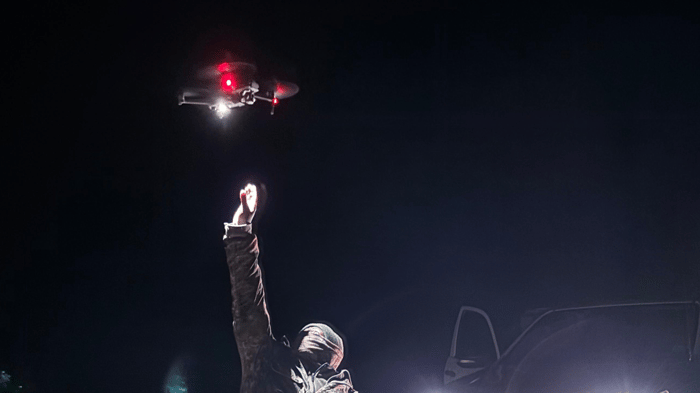
AMES Foundation partnered with ML6 to protect Dabchick Wildlife Reserve from poaching using AI-powered drone surveillance. ML6 built a system that analyses live drone footage, detects threats such as people, vehicles or dogs, and alerts rangers within 60 seconds — helping shift conservation from reactive patrols to real-time protection.
Catch up quickly
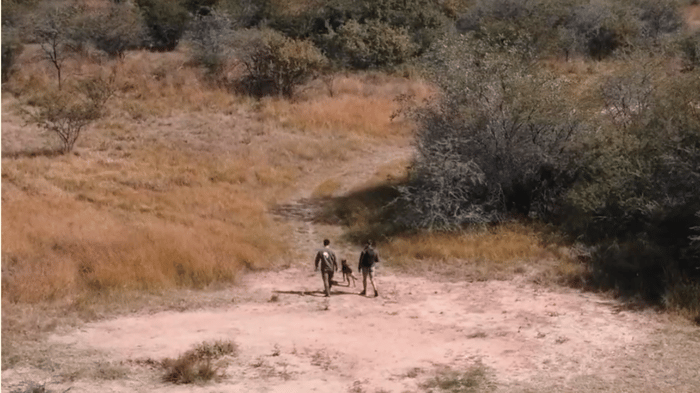
Poaching kills hundreds of rhinos every year across South Africa. The AMES Foundation's Dabchick Wildlife Reserve spans over 1,000 hectares — far too vast for manual surveillance to cover reliably. Together with ML6, AMES deployed an AI detection system that connects directly to live drone feeds, automatically classifies threats in real time using computer vision, and sends instant WhatsApp alerts with location and timestamp to rangers on the ground. Response times dropped to under 60 seconds. The anti-poaching unit went from reactive to proactive — and the animals are better protected for it.
About the AMES Foundation.
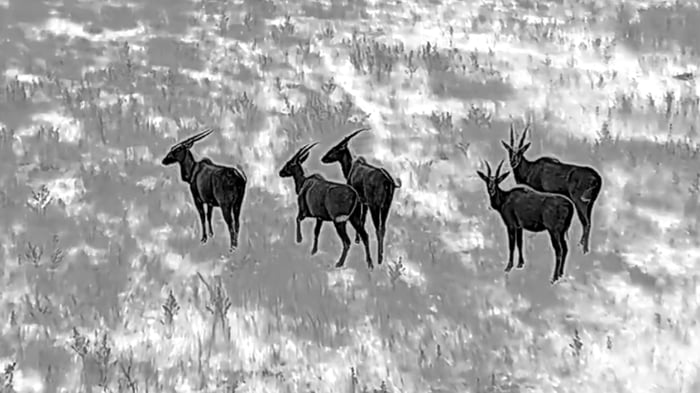
The AMES Foundation gGmbH is a German non-profit on a mission to conserve wildlife, protect biodiversity, and make nature conservation financially sustainable and scalable. They work across three pillars: building a global Guardian Community of conservation partners; developing Conservation Tech including AI-driven wildlife monitoring in national parks and reserves; and directly managing species-rich Habitats — most notably the Dabchick Wildlife Reserve in South Africa, a 1,000+ hectare protected area that is home to rhinos, elands, and dozens of other threatened species.
< 60 sec Alert response time
Continuous drone surveillance
Reserve area monitored
of executive said generative AI will transform their company and industry
IMPACT AT A GLANCE.
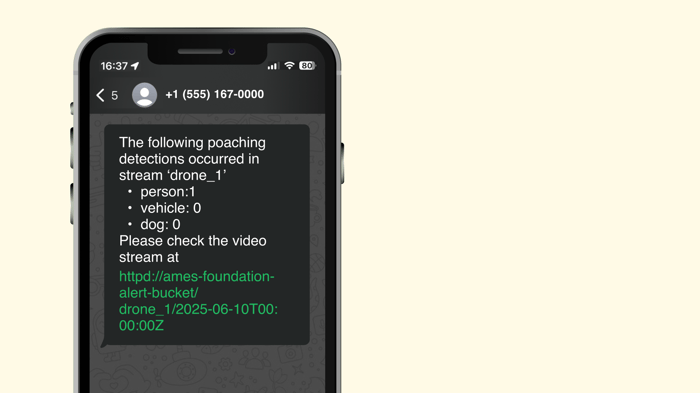
Rangers alerted in under 60 seconds
From the moment an intruder is detected in the drone feed, security teams receive a WhatsApp alert with precise location and timestamp — in under a minute. That speed can be the difference between an interception and a los
24/7 autonomous surveillance
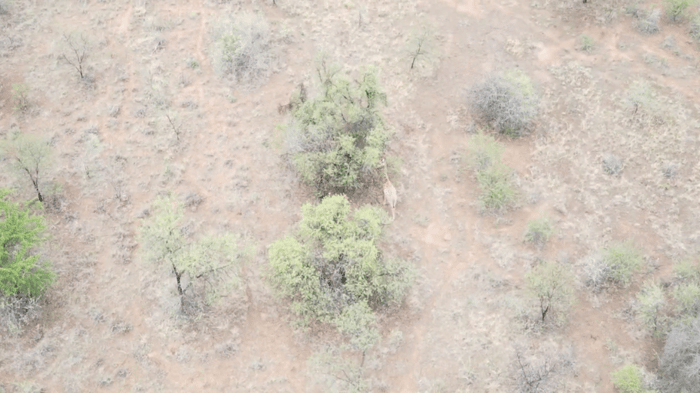
The system monitors live drone footage around the clock without any human operator watching a screen. Vast areas of the reserve that were previously impossible to monitor continuously are now always covered.

Security teams redeployed to higher-value work
By eliminating the manual burden of drone monitoring, rangers and K9 units are freed up for active patrols, animal welfare checks, and community engagement — where human presence makes the biggest difference.

No new hardware required
The solution integrates directly with the reserve's existing drone infrastructure via a live video stream. Zero hardware replacement. Immediate deployment.

A scalable model for conservation
The architecture is replicable across any reserve with compatible drone infrastructure. What was built at Dabchick can be deployed wherever poaching threatens wildlife.

Foundation for predictive conservation
The data collected by the system lays the groundwork for predictive patrol routing, animal behavior monitoring, and centralized dashboards — moving conservation from response to prevention.

Challenge.
Poaching is not an abstract threat — it is a daily emergency. Africa's white rhino population stands at just 17,000 individuals. In the first three months of 2025 alone, 103 rhinos were killed in South Africa. In 2024, the total reached 420. The Dabchick Wildlife Reserve faces this same pressure every day, and the existing approach was leaving dangerous gaps.
Vast land, finite attention
01The reserve spans over 1,000 hectares. Ranger patrols and manually operated drones cannot provide constant, complete coverage across that area. Large portions of the reserve were effectively unmonitored for long stretches of time.
Manual drone monitoring is unsustainable
02Existing drone surveillance required a trained operator to watch a live feed continuously. That is not scalable — human attention drifts, shifts end, and the workload is relentless across such a large area.
Security teams were always reacting, never preventing
03Without automated detection, the security team only learned about threats after they had already entered or moved through the reserve. By the time rangers were mobilized, the window for interception had often already closed.
Existing tools couldn't close the gap
04CCTV cameras cover fixed points. Manual drone flights depend on operator availability. Neither solution provided the continuous, intelligent, area-wide surveillance the reserve needed to protect its most vulnerable animals.
The stakes are existential
05Every missed alert is a potential animal lost. With rhino populations already at critical levels, the cost of surveillance failure is measured not in inefficiency — but in irreversible loss.
SOLUTION.
AMES partnered with ML6, an AI engineering company specializing in computer vision, deep learning, and machine learning solutions. Together, they built a system that plugs directly into the reserve's existing drones and turns every flight into an intelligent, automated surveillance mission.
Continuous monitoring, zero manual effort
01The system connects to a live RTMP video stream broadcast by the reserve's drones via Google's Live Stream API. It monitors that feed continuously — 24 hours a day, 7 days a week — with no human operator required to watch the screen. The drones fly. The AI watches.
Real-time threat classification
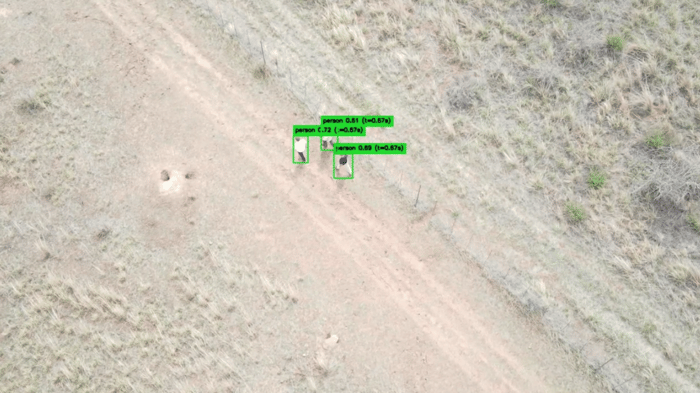
02Using YOLOv11, a state-of-the-art real-time object detection model running inside a Cloud Run container, the system analyzes every frame of the live drone feed. It classifies what it sees — distinguishing between animals, reserve staff, and potential threats such as unknown humans, vehicles, and dogs. Only genuine anomalies trigger an alert.
Instant WhatsApp and email alerts
03The moment a threat is confirmed, an automated alert fires immediately. Rangers receive a WhatsApp message and email containing the detection clip, precise GPS location, and timestamp — directly to their phones. No delays, no manual handoff, no missed notifications.
Built on existing infrastructure
04No new drones. No new cameras. No hardware investment. The solution integrates with what the reserve already has, using Google Cloud Storage and Cloud Run to process video fragments and route them through the detection pipeline. Deployment was fast. Disruption was minimal.
Governed by a strict ethical framework
05Before a single line of code was deployed, ML6 and AMES agreed on binding ethical rules. The technology is restricted to wildlife conservation use only. It cannot be deployed on weapon-enabled or autonomous decision-making drones. It cannot be repurposed for border control or any surveillance outside conservation contexts. Responsible AI is not an afterthought here — it is a precondition.
At AMES, we believe conservation must move from reactive protection to proactive intelligence. By integrating AI-enabled drone detection at our reserves, we reduced alert times to under one minute and strengthened rapid response across the reserve. This is a true game changer — and it needs to be deployed everywhere.

The Technology
Behind the System.
Purpose-built on Google Cloud. Powered by best-in-class computer vision. Deployed in days.
Drones broadcast their live video feed via RTMP to Google's Live Stream API. Video fragments are captured and temporarily stored in a Cloud Storage bucket, ready for processing.
Cloud Run Functions pull video fragments from Cloud Storage, format the stream segments, and trigger the detection and notification processes running in Cloud Run. The entire pipeline is serverless, scalable, and always on.
YOLOv11 — one of the most advanced real-time object detection models available — runs inside the Cloud Run container. It analyzes every frame of the drone livestream, classifying humans, vehicles, dogs, and animals with high accuracy and minimal latency.
When a threat is detected, an automated WhatsApp message is sent instantly to the ranger team's phones. The message includes the detection clip, GPS coordinates, and timestamp — everything needed to act immediately.
Parallel email alerts are sent via SendGrid, ensuring every detection is logged, escalated if needed, and available for audit and review.
Detection clips are automatically stored in Google Drive for review, reporting, and future model retraining — building a growing library of field data that continuously improves detection accuracy.
The Collaboration.
The AMES–ML6 partnership is a demonstration of what focused, ethical AI engineering can achieve when it is applied to a problem that truly matters. ML6 didn't arrive with a complex, over-engineered platform. They focused on the minimal, strategic application of AI — and delivered something immediate, powerful, and deployable in the field.
For AMES, the result is a system that works today and scales tomorrow. The same pipeline that protects Dabchick Wildlife Reserve can be replicated across any reserve with drone capability — turning a local proof of concept into a global conservation tool.
For the broader conservation community, this project proves that sophisticated AI does not need to be expensive, complicated, or ethically compromised. When technology is guided by clear purpose and strong principles, it becomes one of the most powerful tools available to protect the natural world.
Inspired?
Let’s connect and make it happen!
Ready to elevate your AI game? Schedule a meeting with us today and let’s craft a winning strategy together!

.jpeg?auto=compress,webp&upscale=true&width=1191&height=500&name=Fabian%20Schrempf%207%20(1).jpeg)